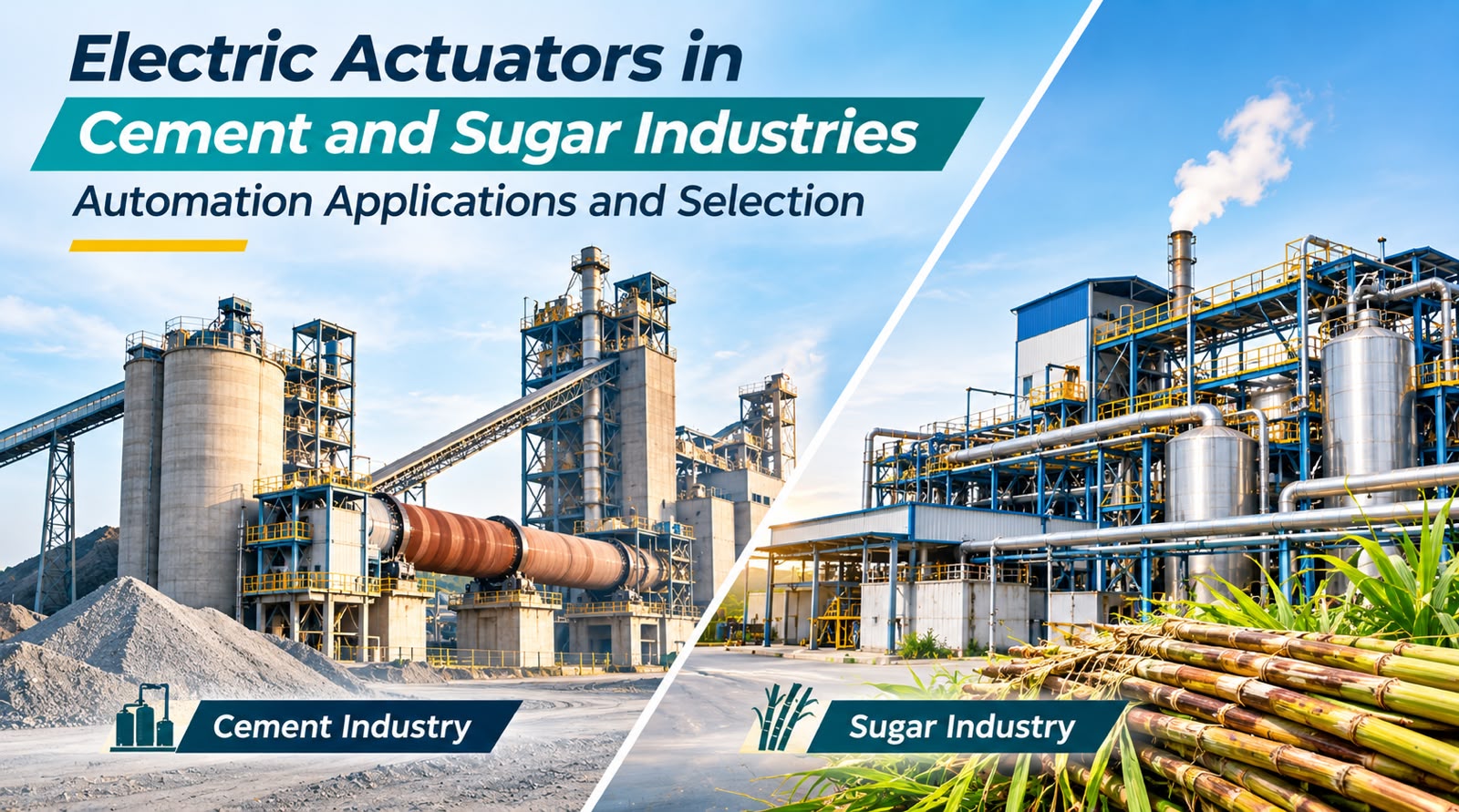

Electric Actuators in Water and Wastewater Treatment Plants: Applications and Benefits
- Industrial Automation / Actuators
- Nov 20, 2026
- 12 Views
Electric Actuators in Water and Wastewater Treatment Plants: Applications and Benefits
Water and wastewater treatment plants play an essential role in supplying clean water, managing industrial wastewater and supporting environmental protection. These facilities depend on a network of pipelines, pumps, valves, filtration systems and treatment equipment to manage water movement at different stages.
As treatment facilities become increasingly automated, reliable valve operation is important for maintaining consistent flow, managing pressure and coordinating treatment processes.
Electric actuators help automate these operations by controlling the opening, closing and positioning of industrial valves. They allow operators to manage water movement remotely, reduce manual intervention and integrate valve operations with plant automation systems.
From pumping stations and filtration units to reservoirs and wastewater treatment facilities, electric actuators are an important part of modern water infrastructure.
In this guide, we explore how electric actuators work in water and wastewater treatment plants, their applications, benefits and important selection considerations.
1. What Is an Electric Actuator for Water Treatment?
An electric actuator for water treatment is an electromechanical device used to operate valves and other compatible flow-control equipment in water treatment and wastewater management systems.
It converts electrical energy into mechanical movement, allowing a connected valve to open, close or move to a required position.
Depending on the valve design, electric actuators can provide quarter-turn, multi-turn or linear movement.
They are commonly used with:
Butterfly valves
Ball valves
Gate valves
Globe valves
Sluice gates
Compatible control valves
Industrial dampers
Electric actuators can receive commands from local control panels, PLCs, DCS systems or other compatible automation equipment.
This allows operators to manage valve operations from a central control room without requiring manual operation at every installation point.
2. Why Are Electric Actuators Important in Water Treatment Plants?
Water treatment plants operate through multiple interconnected processes. Water must move through different treatment stages under controlled flow and pressure conditions.
Manual valve operation across an entire facility can increase operational effort and make coordinated process control more difficult.
Electric actuators help automate valve operations and improve the coordination of different treatment processes.
Their importance includes:
Automated Water Flow Control
Electric actuators operate valves to regulate water movement through pipelines, tanks, filtration systems and distribution networks.
Remote Valve Operation
Operators can control compatible actuators from centralized control rooms, reducing the need to visit individual valve locations.
Consistent Process Operation
Automated valve positioning helps maintain repeatable operating sequences across different treatment stages.
Integration with Plant Automation
Compatible electric actuators can integrate with PLC, SCADA and other industrial automation systems for monitoring and control.
Reduced Manual Intervention
Automated valve operation reduces dependence on manual handling, particularly in facilities with large pipeline networks and multiple treatment units.
3. Applications of Electric Actuators in Water Treatment Plants
Electric actuators are used in several stages of water treatment, depending on the process layout and valve requirements.
A. Raw Water Intake Systems
Raw water intake systems collect water from sources such as rivers, reservoirs, lakes and other supply networks.
Valves installed in these systems regulate the movement of incoming water toward treatment facilities.
Electric actuators can automate compatible intake valves, helping operators control water entry and isolate sections when required.
Typical applications include:
Raw water intake valves
Pipeline isolation
Water transfer systems
Intake channel control
Pumping station valves
B. Filtration Systems
Filtration is an important stage in water treatment. Water passes through filtration equipment designed to remove suspended particles and other contaminants.
Electric actuators can operate valves associated with:
Filter inlet lines
Filter outlet lines
Backwashing systems
Drainage arrangements
Filter isolation
Automated valve sequences can help coordinate filtration and backwashing operations according to the plant's control strategy.
C. Pumping Stations
Pumping stations move water between different treatment stages, storage facilities and distribution networks.
Electric actuators can automate compatible valves installed around pumping equipment.
Applications may include:
Pump discharge valves
Pipeline isolation valves
Bypass valves
Water transfer lines
Distribution headers
Actuator selection must consider valve torque, operating pressure, differential pressure and the required operating sequence.
D. Chemical Dosing Systems
Water treatment facilities use chemical dosing processes for applications such as disinfection, pH adjustment and coagulation.
Electric actuators can operate compatible isolation and control valves within chemical handling systems.
The actuator and valve materials must be suitable for the chemical exposure, process conditions and installation environment.
E. Reservoirs and Water Distribution
Treated water is stored and distributed through reservoirs, pumping stations and pipeline networks.
Electric actuators help operate valves that control water movement between storage and distribution systems.
Typical applications include:
Reservoir inlet valves
Reservoir outlet valves
Distribution pipeline valves
Isolation valves
Water transfer systems
Remote operation can be particularly useful where valves are installed across geographically distributed infrastructure.
4. Applications of Electric Actuators in Wastewater Treatment Plants
Wastewater treatment facilities handle sewage, industrial wastewater and other wastewater streams before treated water is discharged or reused.
These facilities involve multiple mechanical and biological treatment stages.
Electric actuators can automate compatible valves throughout the treatment process.
A. Preliminary Treatment
Preliminary treatment removes large objects, grit and other materials that may damage downstream equipment.
Actuators may operate isolation and flow-control valves associated with preliminary treatment equipment and supporting pipelines.
B. Primary Treatment
Primary treatment separates settleable solids and floating materials from incoming wastewater.
Electric actuators can operate valves associated with inlet channels, settling tanks, sludge handling and drainage arrangements.
C. Biological Treatment
Biological treatment uses microorganisms to break down organic pollutants.
In conventional activated-sludge systems, aeration tanks and associated equipment require coordinated process operation.
Electric actuators may be used for:
Tank isolation
Process water pipelines
Return sludge lines
Waste sludge handling
Supporting process flow control
D. Secondary Clarification
Secondary clarifiers separate biological solids from treated wastewater.
Electric actuators can operate compatible valves associated with treated water outlets, sludge transfer lines and process isolation arrangements.
E. Sludge Handling Systems
Wastewater treatment generates sludge that must be collected, transferred, thickened, dewatered or processed.
Electric actuators can operate valves used in sludge transfer and handling pipelines.
For these applications, actuator selection should account for the valve design, fluid characteristics, solids content and actual operating conditions.
F. Effluent Treatment Plants
Industrial effluent treatment plants handle wastewater generated by manufacturing and processing facilities.
Electric actuators can automate valves used in:
Effluent collection systems
Treatment tanks
Filtration units
Chemical treatment lines
Sludge transfer
Treated effluent discharge
The actuator, valve and wetted materials must be appropriate for the effluent composition and operating environment.
5. Types of Electric Actuators Used in Water and Wastewater Treatment
Different valves require different types of mechanical movement. Selecting the correct actuator depends on valve configuration, operating torque or thrust, travel requirements and control strategy.
A. Quarter-Turn Electric Actuators
Quarter-turn actuators provide approximately 90 degrees of rotary movement.
They are commonly used with:
Butterfly valves
Ball valves
Plug valves
Rotary isolation valves
They are suitable for water distribution, pipeline isolation, pumping stations and other applications involving compatible quarter-turn valves.
For example, SDTORK's SD-1001-ECO Quarter-Turn Electric Actuator is listed for water and wastewater applications.
B. Multi-Turn Electric Actuators
Multi-turn actuators provide multiple rotations of the output shaft.
They are commonly used with:
Gate valves
Sluice gates
Globe valves
Other compatible multi-turn valves
These actuators are useful in applications where valve travel requires multiple rotations.
Selection should consider the required torque, number of turns, operating time and valve characteristics.
C. Linear Electric Actuators
Linear electric actuators produce straight-line movement.
They are used where a valve or mechanism requires controlled linear displacement.
Applications may include:
Globe valves
Gate valves
Dosing equipment
Compatible control valves
Linear process mechanisms
SDTORK's Linear Electric Actuator Range includes actuator configurations for industrial water treatment applications.
6. On-Off and Modulating Control in Water Treatment Applications
Electric actuators can be configured for different operating modes depending on the process requirements.
On-Off Operation
On-off actuators move valves between defined positions, typically fully open and fully closed.
They are commonly used for:
Pipeline isolation
Tank filling
Reservoir inlet and outlet control
Pumping station isolation
Automated water distribution
Modulating Operation
Modulating actuators allow valves to move to intermediate positions.
They are useful when water flow needs to be adjusted according to process conditions.
Possible applications include:
Flow regulation
Pressure management
Treatment process adjustment
Controlled water distribution
Compatible process control valves
The actuator, valve and controller must all be suitable for the required modulation duty.
For a deeper understanding, read our guide on Modulating vs On-Off Electric Actuators: Working, Applications and Differences.
7. Benefits of Electric Actuators in Water and Wastewater Treatment
Electric actuators offer several operational advantages when correctly selected and integrated into treatment plant automation.
1. Improved Operational Efficiency
Automated valve operation helps coordinate different treatment stages and reduces the need for repeated manual adjustments.
2. Centralized Monitoring and Control
Compatible actuators can be connected to PLC and SCADA systems, allowing operators to monitor and control equipment from a central location.
3. Reliable Valve Operation
Properly selected actuators provide controlled and repeatable valve movement according to the operating requirements.
4. Reduced Manual Work
Remote operation can reduce the amount of manual intervention required across large treatment facilities.
5. Flexible Automation
Quarter-turn, multi-turn and linear actuator configurations support different valve types and operating arrangements.
6. Suitable Enclosure Protection Options
Water treatment installations may expose equipment to moisture, dust, humidity and outdoor conditions.
Actuator enclosure protection should be selected according to the installation environment and the specific model's certified rating.
Certain SDTORK actuator configurations offer IP66 and IP68 protection options, subject to the individual product specification.
7. Support for Long-Term Plant Operations
Correct actuator sizing, suitable installation and planned maintenance help support consistent operation throughout the equipment lifecycle.
8. How to Select the Right Electric Actuator for Water Treatment
Choosing an actuator requires more than considering the valve size.
Engineers should evaluate the complete application before finalizing the actuator.
1. Identify the Valve Type
Determine whether the application involves a butterfly valve, ball valve, gate valve, globe valve or another valve configuration.
Each valve type may require a different actuator movement.
2. Calculate Required Torque or Thrust
The actuator must provide sufficient operating torque or thrust to move the valve under actual operating conditions.
Consider:
Valve design
Differential pressure
Fluid characteristics
Seat friction
Operating conditions
Mechanical losses
Required safety margin
For a detailed explanation, read our guide on How to Select and Size an Electric Actuator: Torque Calculation Guide.
3. Check Operating Conditions
Evaluate pressure, temperature, fluid composition and operating frequency.
Wastewater applications may involve suspended solids, sludge and corrosive substances, making application-specific selection important.
4. Choose the Correct Control Mode
Determine whether the process requires on-off, inching or modulating operation.
The actuator's duty rating must match the expected operating frequency.
5. Verify Environmental Protection
Check the enclosure protection rating according to moisture, dust, outdoor exposure and installation conditions.
6. Confirm Electrical Supply
Verify the available voltage, phase and frequency at the installation location.
7. Evaluate Automation Compatibility
Confirm whether the actuator needs to integrate with PLC, SCADA or other plant automation systems.
Check the availability of position feedback, remote operation and communication options where required.
9. Why Choose SDTORK Electric Actuators for Water and Wastewater Applications?
SDTORK Controls Pvt. Ltd. provides electric actuator solutions for industrial valve automation across water and wastewater treatment applications.
Its actuator range includes quarter-turn, multi-turn and linear configurations designed for different valve types and operating requirements.
Depending on the selected model, the range offers features such as:
Different torque and thrust capacities
On-off and modulating operating options
Weatherproof enclosure configurations
Position feedback and automation options
Manual override arrangements on applicable models
Compatibility with selected industrial automation systems
SDTORK's dedicated Water & Wastewater Industry Solutions page covers applications including pumping stations, desalination facilities, reservoirs, water treatment plants and wastewater treatment plants.
For product selection, engineers should verify the exact model specifications, protection rating, control functions and operating conditions.
10. Frequently Asked Questions
What is an electric actuator used for in water treatment plants?
Electric actuators operate valves used in water intake, filtration, pumping, reservoirs, distribution and other treatment processes. They help automate water movement and support remote valve control.
Which type of electric actuator is used in wastewater treatment plants?
Quarter-turn actuators are commonly used with compatible butterfly and ball valves. Multi-turn actuators are suitable for gate valves and other multi-turn arrangements. Linear actuators are used where straight-line movement is required.
Can electric actuators be used in pumping stations?
Yes. Electric actuators can operate compatible valves in pumping stations, including isolation, discharge, bypass and water transfer arrangements.
Can electric actuators integrate with SCADA systems?
Compatible electric actuators can integrate with SCADA systems through suitable control interfaces, position feedback and communication arrangements.
Are electric actuators suitable for outdoor water treatment installations?
Yes, provided the actuator's enclosure protection, materials and environmental ratings are suitable for the installation conditions.
What is the difference between a quarter-turn and multi-turn actuator?
A quarter-turn actuator provides approximately 90 degrees of rotary movement, while a multi-turn actuator provides multiple rotations of its output shaft. The correct type depends on the valve's operating mechanism.
Are electric actuators used in effluent treatment plants?
Yes. They can operate compatible valves in effluent collection, treatment, filtration, sludge handling and discharge systems.
How do I select the correct actuator for a water treatment valve?
Consider the valve type, torque or thrust requirements, pressure, fluid characteristics, operating frequency, control mode, electrical supply and environmental protection requirements.
Conclusion
Electric actuators play an important role in modern water and wastewater treatment facilities by enabling automated valve operation and controlled water movement.
From raw water intake and filtration to pumping stations, reservoirs, biological treatment and effluent management, electric actuators support different stages of water infrastructure.
Selecting the correct actuator requires understanding the valve configuration, torque or thrust requirements, operating conditions, control mode and installation environment.
With suitable actuator selection and integration, treatment facilities can improve operational coordination, reduce manual intervention and support reliable long-term plant operation.
Looking for electric actuators for your water or wastewater treatment application?
Explore SDTORK Water & Wastewater Industry Solutions and discover electric actuator configurations designed for industrial water management and valve automation.
Contact SDTORK Controls Pvt. Ltd. to discuss your valve type, operating requirements and actuator selection.
Related Posts
- Nov 30, 2026
- SDTORK
- 10
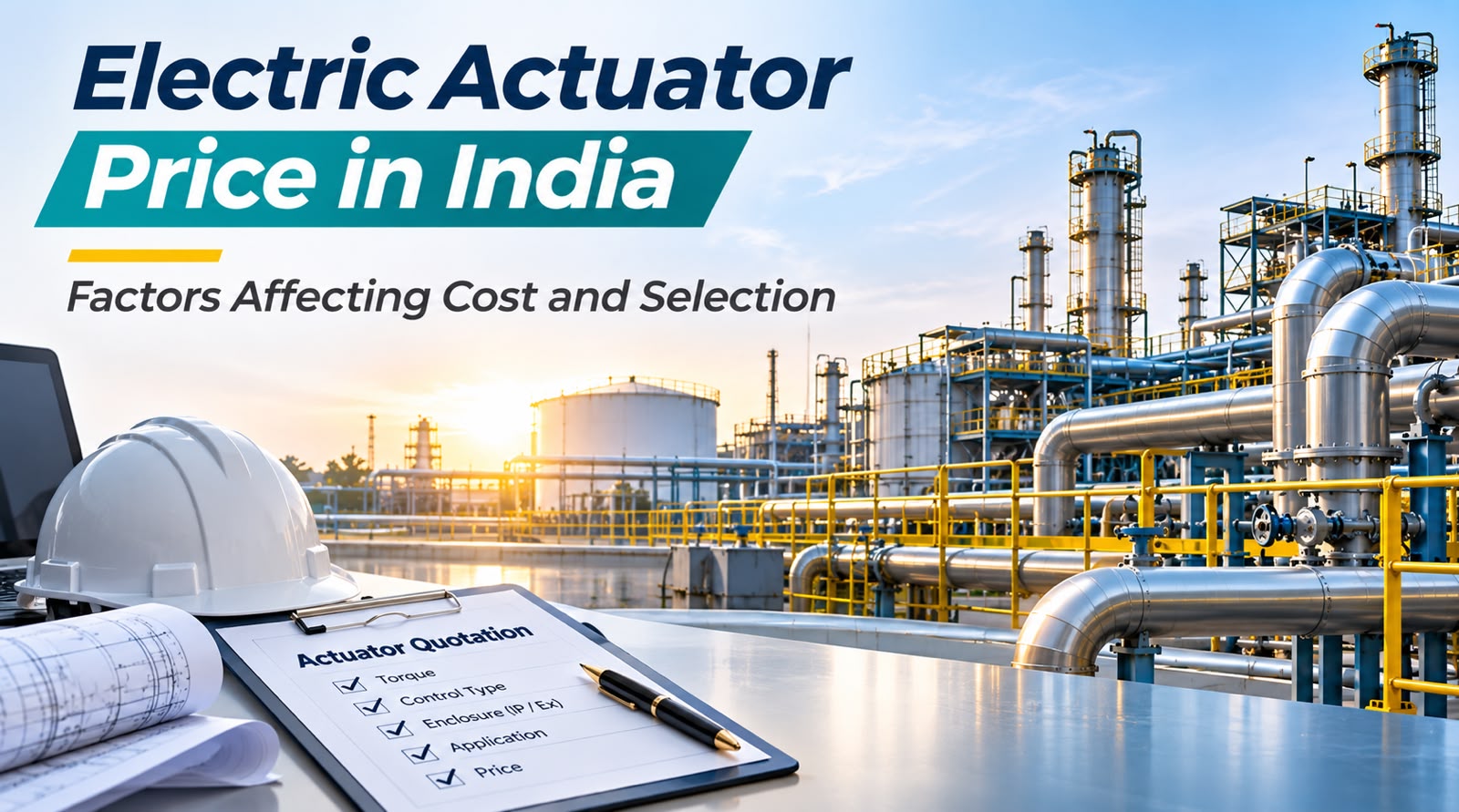
Electric Actuator Price in India: Factors Affecting Cost and Selection
Explore More
- Nov 27, 2026
- SDTORK
- 10